
Last updated November 22, 2026
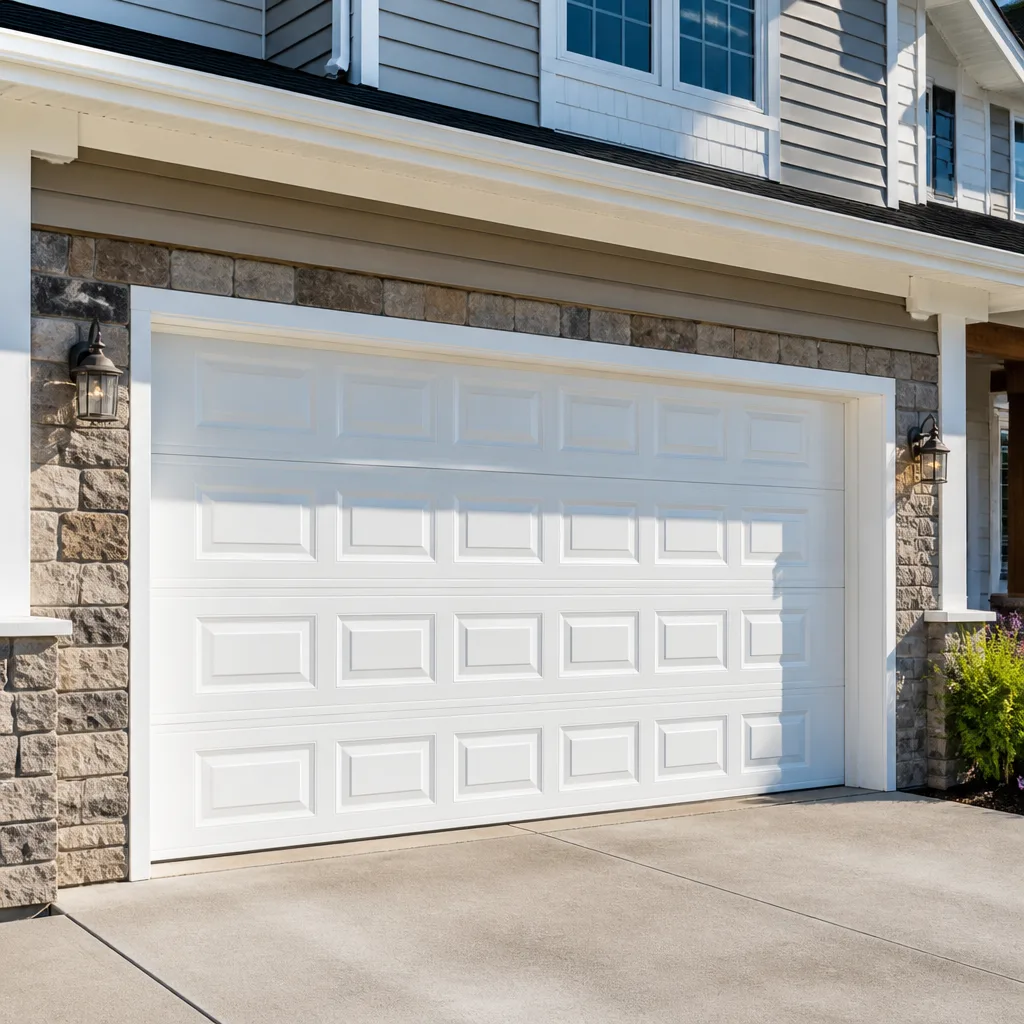 Raised-panel steel
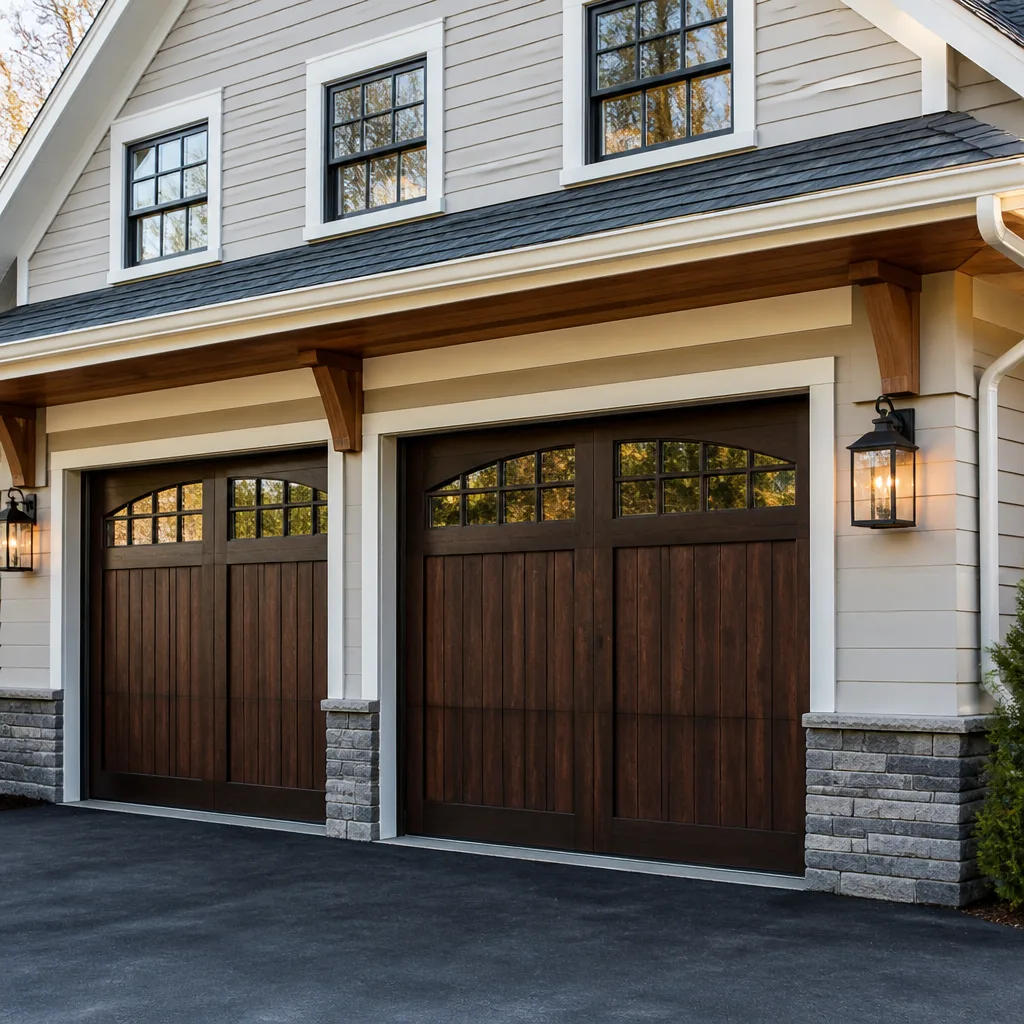 Carriage house
 Modern flush
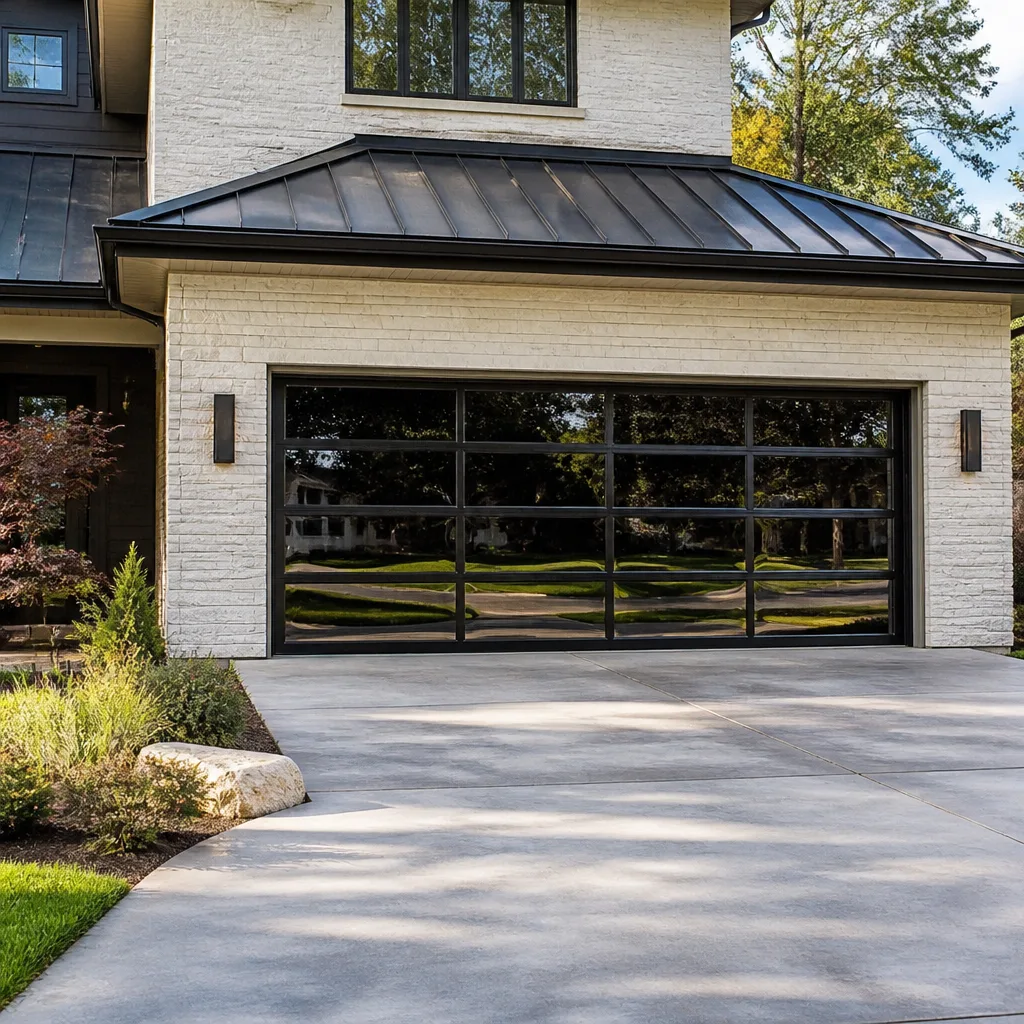 Full-view glass
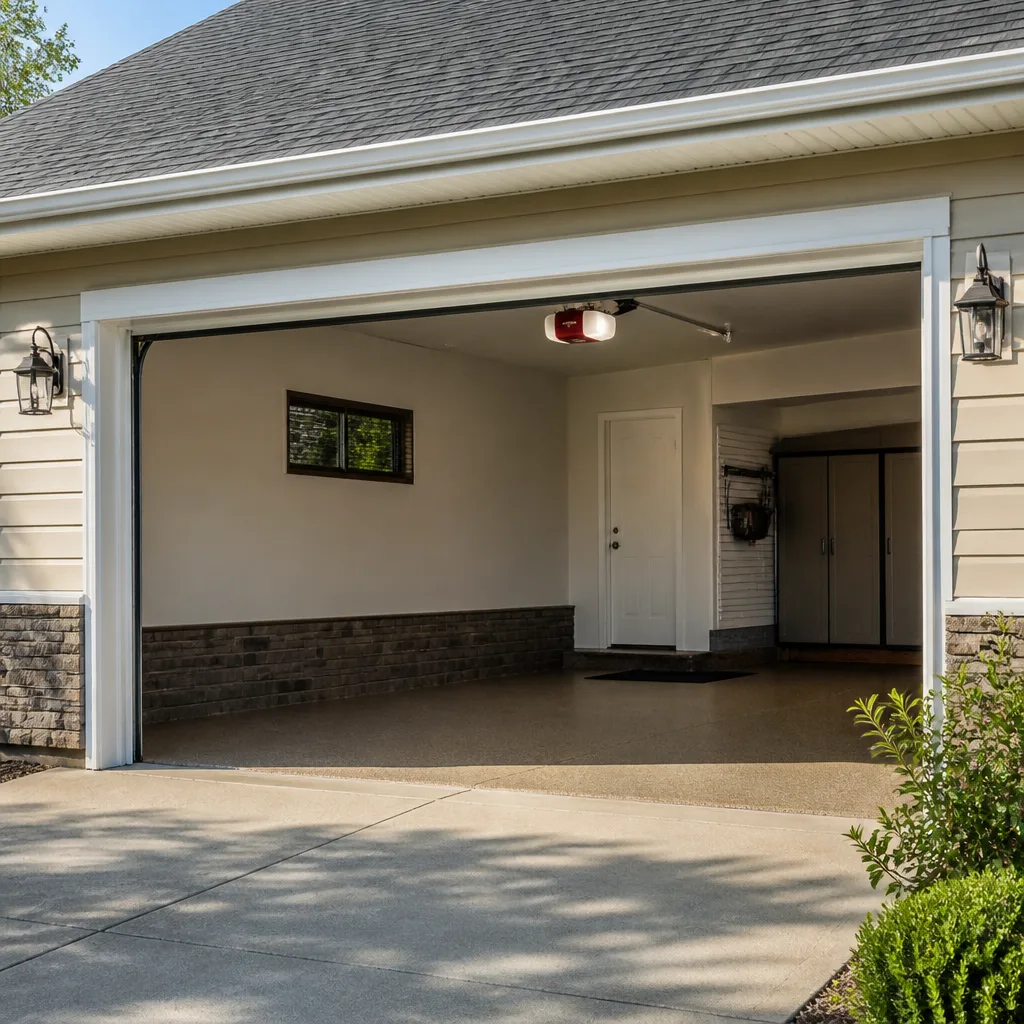 LiftMaster openers
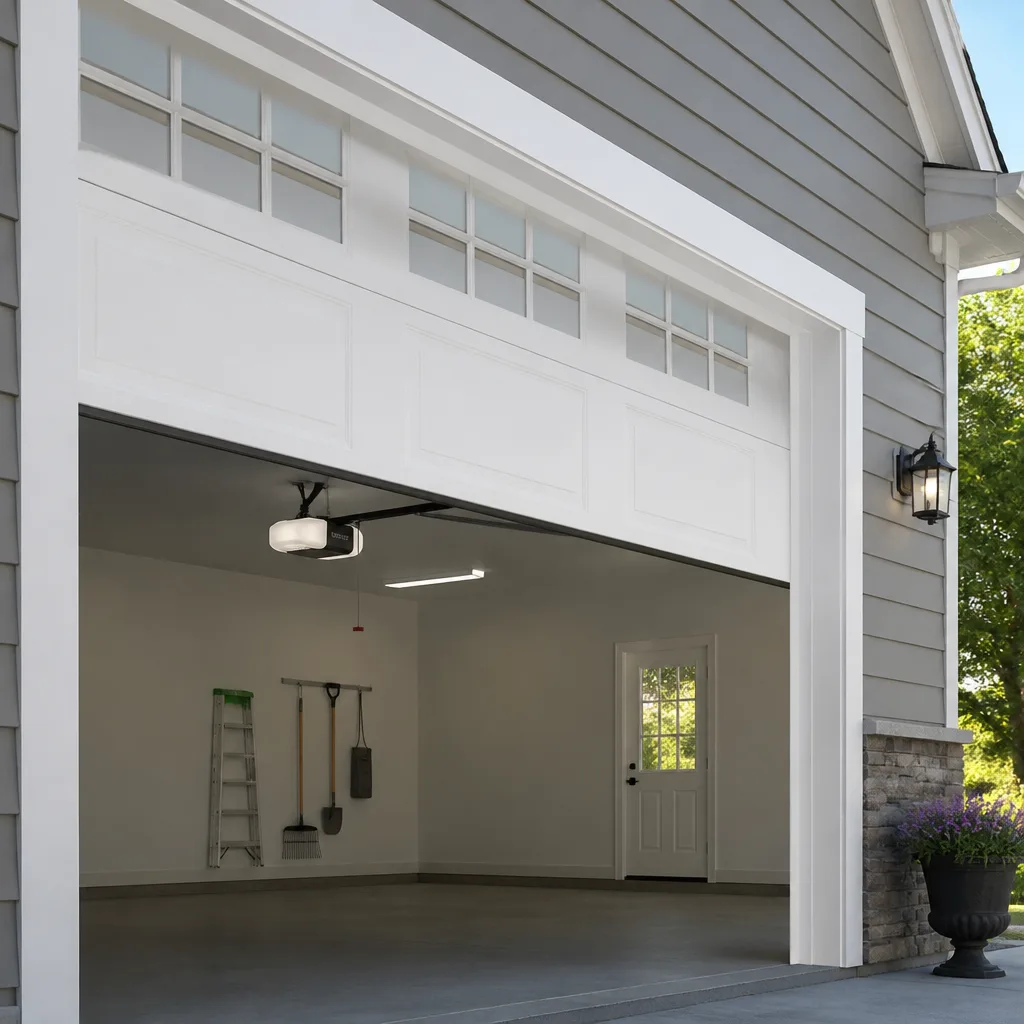 Chamberlain openers
Full 25-point door and opener safety check with every visit - springs, cables, rollers, tracks, and your LiftMaster or Chamberlain opener included
You get a price before we start. It does not change when the pro arrives.
Get your free estimateDIY vs Professional Garage Door: The Somerville Homeowner’s Decision Guide
Most homeowner debates about DIY versus professional service are really arguments about skill. You’re handy, you’ve fixed a sink, you’ve replaced a ceiling fan, so why shell out for someone to bolt on a bracket? The garage door is where that reasoning falls apart. The dangerous parts of a garage door are not the fasteners. They’re the stored energy systems, the torsion spring and the overhead cable, and those don’t fail politely. This guide is about drawing the line at the right place in Somerville: which jobs are genuinely within a careful homeowner’s reach, which jobs have a downside that isn’t a botched repair but a medical bill, and how to know the difference before you pick up a wrench. We’ll cover the real physics, the local complications that come with older garages, and the smart way to prep so a professional fix costs you less.
Quick Answer
In Somerville, DIY makes sense for lubrication, bottom seal replacement, minor hinge tightening, and remote or keypad reprogramming. It never makes sense for torsion spring or cable work, because those parts store lethal levels of energy and fail without warning. Everything else – panel replacement, opener installation, track realignment – sits in the middle, and the right call depends on how old your garage is and what you find once you start.
Styles & brands we work with
- Raised-panel steel
- Carriage house
- Modern flush
- Full-view glass
- LiftMaster openers
- Chamberlain openers
Table of Contents
- Why This Isn’t Actually a Skill Question
- The Tasks That Are Genuinely Safe to DIY
- The Tasks You Should Never DIY, Regardless of Skill Level
- The Middle Ground: Panels, Openers, and Older Garages
- How to Calculate the True Cost of DIY
- What Professional Garage Door Service Costs in Somerville
- How to Reduce Professional Service Costs Without Touching the Springs
- Why Somerville Garages Complicate Every Job
Why This Isn’t Actually a Skill Question
A fully wound torsion spring on a standard residential door holds enough energy to throw a grown adult across a garage. That isn’t an exaggeration for effect. It’s why responsible technicians treat a loaded spring with the same caution they’d give a live electrical panel. The energy is always there in a functioning door, and it’s released the moment the spring or a cable lets go.
Here’s the part that separates the garage door from other home repairs. With most DIY work, the worst case is a job that looks bad or doesn’t function. You redo it or you call someone. With impact from a winding bar or a snapped cable, the worst case is a hospital visit. That’s not a moral judgment on your competence; it’s about what the failure mode actually is. A loaded spring fails fast and without warning. A cable that’s been under tension for years can let go during the exact repair you’re attempting.
We work on garage doors in Somerville all day, and our technicians have up to 11 years of experience with this hardware. None of us approach a torsion spring casually. So when this guide says “call a professional for X,” it’s not because we think you aren’t capable. It’s because the risk-reward math on those specific jobs is so lopsided that professional service is the only sensible answer, even for a genuinely skilled homeowner. The tasks where DIY is smart are real and worth doing. This guide will name them plainly. So will the ones you should leave alone.
The Tasks That Are Genuinely Safe to DIY
A careful homeowner can handle a meaningful chunk of routine garage door upkeep without any risk beyond a scraped knuckle. The rule of thumb is simple: if a task involves adjusting or replacing a part that isn’t under spring or cable tension, it’s fair game. If it involves the springs, the cables, or the structural track, it isn’t.
These tasks are genuinely safe for a careful DIYer:
- Bottom seal replacement. The rubber weather seal at the base of the door takes a beating from New England’s freeze-thaw cycles and eventually cracks or falls off. It’s held on by aluminum retainers (often slide-in, sometimes screwed) and pulls out by hand. No tension, no danger. Measure the door width, buy a matching seal, and it’s a 30-minute job.
- Minor hinge tightening. Loose hinge screws are why so many doors rattle. A screwdriver or a small socket set handles this. Don’t over-tighten into rotting wood – use wood glue or a slightly larger screw if the hole is stripped.
- Lubrication. A white lithium grease or silicone-based lubricant on the rollers, hinges, and hinges’ pivot points every few months cuts wear. Never use WD-40 as a long-term lubricant; it displaces rather than protects.
- Remote and keypad reprogramming. Every modern opener has a learn button on the operator. You press it, then hold the remote button until it clicks. The owner’s manual or a quick glance at the opener head tells you how. If you have a LiftMaster, Chamberlain, or Craftsman opener, the sequence is usually documented on a sticker inside the light cover.
- Visual inspection. A small level, a flashlight, and five minutes can reveal a bent track or a frayed cable before they become expensive. Inspect, don’t adjust.
- Track cleaning. Wipe down the tracks with a dry cloth or a very light application of silicone spray. Don’t grease the tracks; it collects grit and wears rollers faster.
If it’s not on this list and it involves anything under tension, treat it as professional-only. We’ll get to the specific line next. That line is where the smart homeowner stops.
The Tasks You Should Never DIY, Regardless of Skill Level
This list is short and non-negotiable. Every task here involves stored mechanical energy or structural load, and every one of them has a failure mode that can seriously injure you. This isn’t about your experience with tools. It’s about the physics. Somerville’s older garages make these risks more immediate, because the hardware is often original or has been serviced by a previous owner with questionable technique.
Never attempt these yourself:
- Torsion spring replacement. The torsion spring is mounted above the door on a steel shaft and is wound under significant rotational tension. The winding bars that hold it in place during service have to be used in a precise sequence, and both bars must be seated securely. A single slip while the spring is loaded can throw a bar with enough force to break a bone or cause a head injury. Even “unwinding” a broken spring requires the same equipment and care as replacing it.
- Extension spring replacement (especially older Somerville doors). Extension springs run along the upper tracks under severe tension. An unloaded or failed extension spring can whip with dangerous force. If your garage has extension springs with no safety cables running through them, that’s a safety issue a professional should address immediately.
- Cable replacement under tension. The lift cables are under the same tension as the door’s weight, and they’re what actually keep the door from falling. A cable that releases under load can snap violently and take the door down with it. There’s no safe way to do this without the proper winding technique and restraints.
- Structural header work. If the garage door’s supporting header or framing is failing, that’s not a garage door problem, it’s a structural one. Only a licensed contractor or structural professional should touch it. Moving or cutting a load-bearing header to install a new door requires structural review.
- Track replacement after a door has come off. Once a door has jumped the track or come down, the tracks, springs, and cables may all be compromised. Attempting to rehang or realign by hand without checking the whole system risks a second failure with you underneath it.
This is where our spring repair offering matters most. It’s a core service, not an upsell, and it’s the most commonly neglected failure point on a residential door. It’s also the reason experienced homeowners with solid tools still call a professional. If you suspect a spring is failing, the correct move is to stop using the door and call. A trained pro can tell you which part is failing and fix it safely.
The Middle Ground: Panels, Openers, and Older Garages
Panel replacement and opener installation are the two biggest jobs where DIY is possible, and where the calculation to call in a pro gets more interesting. Neither involves spring or cable tension. That’s what makes them technically fair game. But the context you’re working in – specifically the age and condition of a Somerville garage – can turn a clean swap into a complicated job.
A panel replacement on the face of it is straightforward: measure, order the matching panel from your door’s manufacturer, unbolt it, and bolt in the new one. If your door is a Clopay or Amarr model, the panels are standardized and replacements are available. The complication is that panel hardware on an older door is often rusted, bent, or missing components from past repairs, and removing a panel means working around a door that’s still on its springs.
Opener installation is the same story. Swapping in a new Genie or Chamberlain unit is a project most careful homeowners can complete in a few hours. However, older garages in neighborhoods like Union Square or the streets off Somerville Avenue often have a 1930s-era ceiling, an original jackshaft-mount opener, or low clearance that limits standard door height. These conditions require specific hardware and sometimes a different opener type entirely. If you buy the wrong one online, you’ll be stuck returning it.
What makes professional service worth it in these cases isn’t that we can turn a wrench. It’s that we can diagnose the whole system in one visit and bring the right parts, which matters when the alternative is three trips to the hardware store plus a second attempt. If you’re patient and handy, these are legitimate DIY projects. If you’re working on a 25-year-old door in a converted carriage house with zero documentation, feel free to skip the guesswork.
How to Calculate the True Cost of DIY
The sticker price of a set of torsion springs or a new opener is not the cost of doing the job yourself. Once you add up the actual price, the tools you don’t own yet, the value of your time, and the real possibility of a do-over, the gap between DIY and professional service often narrows or disappears. Here’s the framework we’d use if we were sitting in your driveway looking at the door.
- Part price. Add in shipping delays and returns. Springs are often sold in pairs. A single spring costs more than the cheapest price listed for one because they usually pair one. A matched pair costs about twice the single-spring price.
- Tool purchase. The single most important tool for spring work – the winding bars – you probably don’t own. Add the cost of those, plus a decent socket set, a ladder, and a helper for the heavy door sections. If you don’t own the tools required to do the job correctly, this is where a careful homeowner should stop and ask whether the project is worth the risk.
- Value of your time. Put a number on a Saturday you’ll spend on this. If the number is higher than the professional call, the DIY calculation stops there.
- Cost of a redo. This is the number most people leave out. If a panel doesn’t line up or a door falls off track, you pay the professional to fix it anyway – plus the wasted materials. Budget for one redo in the worst case.
- Risk cost. For spring and cable work, add the potential injury into the math. A single emergency room visit outweighs the cost of every professional repair on the property. That’s not a scare tactic; it’s the reason we separate those jobs entirely from the middle-ground list above.
The professional cost, for comparison, is a single upfront number, stated in a written estimate before any work starts. You know what you’re spending before anyone changes a spring. That predictability is worth more than people give it credit for, especially when the job could otherwise spiral into multiple trips and a second attempt.
What Professional Garage Door Service Costs in Somerville
Here’s a structured look at typical local pricing on the jobs a homeowner is most likely to face. Every number below is an estimate. The written estimate sets the final price for your specific door, so what you’re quoted is what you pay for the work described.
- Torsion spring replacement (one spring): range for a single spring. A matched pair is usually replaced together, so a pair runs roughly double a single spring.
- Extension spring replacement: priced per spring; older doors with a pair will typically need both.
- Cable replacement (per cable): a single-tension cable repair, with labor included in the estimate.
- Opener repair or replacement: priced by the unit for the opener hardware itself, with motor, circuit board, and connectivity issues all handled through our garage door opener repair service. If the opener is dead and the door won’t move, the call is urgent.
- Panel replacement: priced per panel, with availability depending on your door’s manufacturer (Clopay and Amarr panels are typically easier to source than discontinued Wayne Dalton lines).
- New door installation: quoted after a free measure, since door size, style, and insulation level all affect the price.
- Tune-up and adjustment: lubrication, balance check, hardware tightening, and track check; priced per visit.
We diagnose by brand-specific behavior, not guesswork. If your opener is a LiftMaster and the issue is a travel limit, that’s a different repair than a Genie with a stripped gear. Our technicians have seen enough of the major brands to move straight to the likely cause, which saves you both the diagnostic time and the wrong-part trip. That familiarity is one reason we emphasize garage door spring repair as a core service rather than a specialty sideline; the springs are where most of the safety risk and most of the diagnostic value sits. For a broader overview of everything we handle, see our garage door repair page.
None of these ranges apply to installation work, which is measured and scheduled rather than turned around the same day. The point of a free measure and a written price is that you know the cost before you commit, not after.
How to Reduce Professional Service Costs Without Touching the Springs
The biggest lever a homeowner has is preparation. A technician who arrives to a door with a known symptom, a make and model, and a clear account of what happened can often diagnose and fix in one visit. A homeowner who just says “it stopped working” and can’t find the opener’s model number adds a half-hour of discovery that gets billed anyway. The cost of professional service doesn’t change because of the scene you set, but the scope of what’s needed can narrow substantially when you’ve done the groundwork.
These are the things a competent homeowner can do to keep the professional bill down:
- Write the door and opener model down. A door’s manufacturer and model are often on a sticker on the hinge side of the bottom panel, or the opener’s model is inside the light cover. Clopay, Amarr, Wayne Dalton, Craftsman, Genie, LiftMaster, Chamberlain, and Raynor all use readable labels. A photo of the label on your phone is worth a lot.
- Describe the failure in plain terms. “The door goes up about a foot and stops, then the opener light flashes five times” is more diagnostic than “the door is broken.” The flash code pattern is specific to your brand and narrows the diagnosis immediately.
- Note the age and any past repairs. A door that’s had a previous spring replacement, a panel swap, or an opener repair on one side of the shaft tells a technician where to look.
- Test the balance before you call. Disconnect the opener (pull the release handle) and lift the door by hand to about halfway. A balanced door stays put. A door that falls or won’t hold is telling you something about the spring or cable, and mentioning it in the call saves diagnostic time.
- Clear the garage floor and access to the ceiling. The technician needs room to work and a ladder with clear overhead space. A cluttered garage is more time on the invoice.
- Take the photo before anyone climbs the ladder. A few photos of the springs, the tracks, and the opener head, taken from a safe distance, help the technician plan the visit before arriving and often catch a part that needs to be ordered in advance.
These aren’t safety-only steps, though they’re that too. They’re the practical difference between a call that gets resolved in one visit and one that takes two. Our technicians have up to 11 years of experience, and in our experience, the customer who’s done a little homework gets a faster, cleaner fix than the one who hasn’t. That’s a real cost saving without touching a spring.
Why Somerville Garages Complicate Every Job
Somerville is an old, dense, and architecturally varied city, and its garages reflect that. You’ll find garages tucked behind Victorians near Davis Square, freestanding concrete-block buildings off Union Square, and converted carriage houses on the blocks between Winter Hill and Teele Square that were originally designed for horses and Model Ts. These are not the uniform, single-width 1990s garages that many online how-to guides assume. That’s precisely why this city’s DIY calculations are different from the national picture.
What does that mean in practice?
- Low or unusual clearance. Older garages frequently have a lower finished ceiling than the minimum clearance a standard opener needs. A new opener that works fine in a modern garage may not fit up there. Professional installation accounts for the actual dimensions; a DIY install might find that out after unboxing.
- Original or mixed hardware. Original doors from the mid-20th century sometimes have extension springs with no safety cables and obsolete opener units, or a mix of hardware from different eras. That’s a specific reason those older springs should never be touched by anyone without a trained eye and the correct equipment. The cables and retaining hardware are not guaranteed to be in the condition a modern spring needs.
- Salt and winter road conditions. The road salt that gets kicked into a garage each winter takes a toll on the door’s bottom seal, hinges, and rollers. The bottom seal is one of the easiest DIY jobs on the list and one of the most worthwhile in Somerville, because the seal’s wear and tear is the direct result of every January. The door’s external coating and hardware also take a beating, so a quick inspection each spring is a genuinely sensible habit.
- Uninsulated garages and cold snaps. Many Somerville garages share a wall with the house or sit under a living area. A failed door seal or a gap in the track lets in cold air and snow that can freeze the door shut. The bottom seal replacement and hinge tightening are real protections against the coldest weeks of a Somerville winter.
- Space constraints for installation. Getting a full-height door and its opener into a narrow, shared, or detached Somerville garage sometimes requires a specific opener type. Professional installation accounts for that before ordering, so you’re not stuck with a unit that fits the door but not the ceiling.
None of that makes Somerville garages unworkable. It makes them specific. A generic online guide can tell you to install a given opener, but it can’t see that the ceiling above your door is 14 inches lower than expected or that the original extension springs are still in place. That’s where local knowledge pays for itself, and why our approach leans on the fact that we’re working on Somerville doors, not just doors in general. If you’re troubleshooting a door and want a second read on what you’re seeing, our Somerville Garage Door Repair Pros overview is a good place to start.
Common Mistakes to Avoid
Some of the most common mistakes are the ones we see regardless of how handy a homeowner is. None of them are about lacking skill. They’re about making a calculation without the right information.
- Greasing the tracks. It feels like the obvious way to quiet a noisy door, but grease on garage door tracks collects grit and accelerates roller wear. Tracks get a dry cloth or a light silicone spray, never heavy grease.
- Treating a snapped spring as a “just one more open” situation. A door with a broken spring gets heavy fast and can come down hard. If a spring is gone, stop operating the door entirely. This is the most important mistake to avoid.
- Replacing one spring of a pair. Matched springs wear at the same rate. Replacing one leaves the older one to fail under the full load, and it will fail much sooner than if both were replaced together. A matched pair is the standard replacement, and a pair costs roughly twice a single spring.
- Buying an opener before verifying ceiling height. Most DIY opener installs go wrong before the box is opened, when the homeowner hasn’t checked the actual clearance in an older garage – a common problem in Somerville’s converted carriage houses. A professional measure avoids the return trip.
- Ignoring a frayed cable. A lift cable that’s fraying is a warning, not a maintenance item. The cable is under full door load, and a frayed one can let go. That’s a professional call, and it’s one worth making before the cable decides for you.
- Buying a spring by the wrong size. Springs are specified by wire gauge, length, inside diameter, and wind direction. Getting it “close” means the door is out of balance and the new spring wears out early. This one is another reason we don’t recommend a DIY spring purchase at all.
- Forgetting that old Somerville garage slopes. Many of these garages have settled or are on a slight grade with low overhead clearance, and a door that “worked fine” for the previous owner can bind or jam when you open it after a long winter. If a door is suddenly hard to move, treat it as a symptom, not a nuisance.
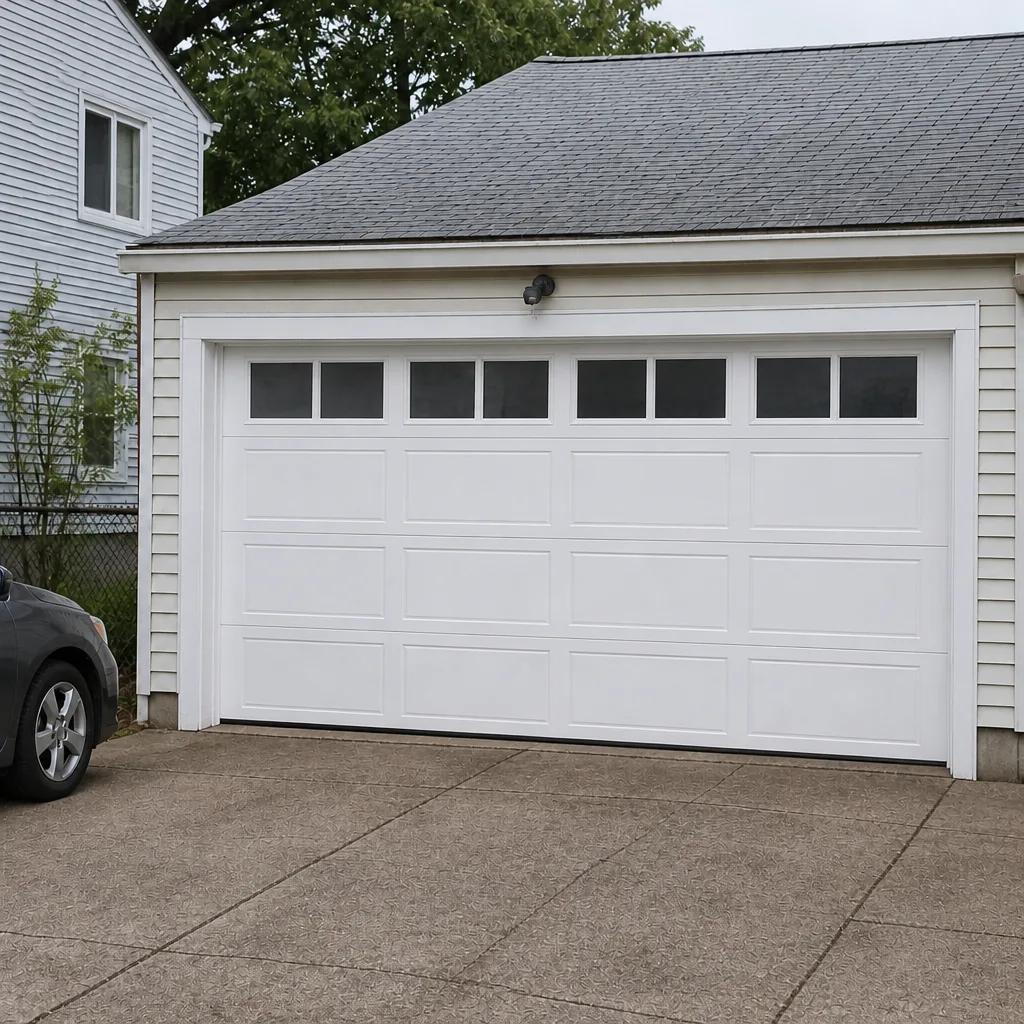
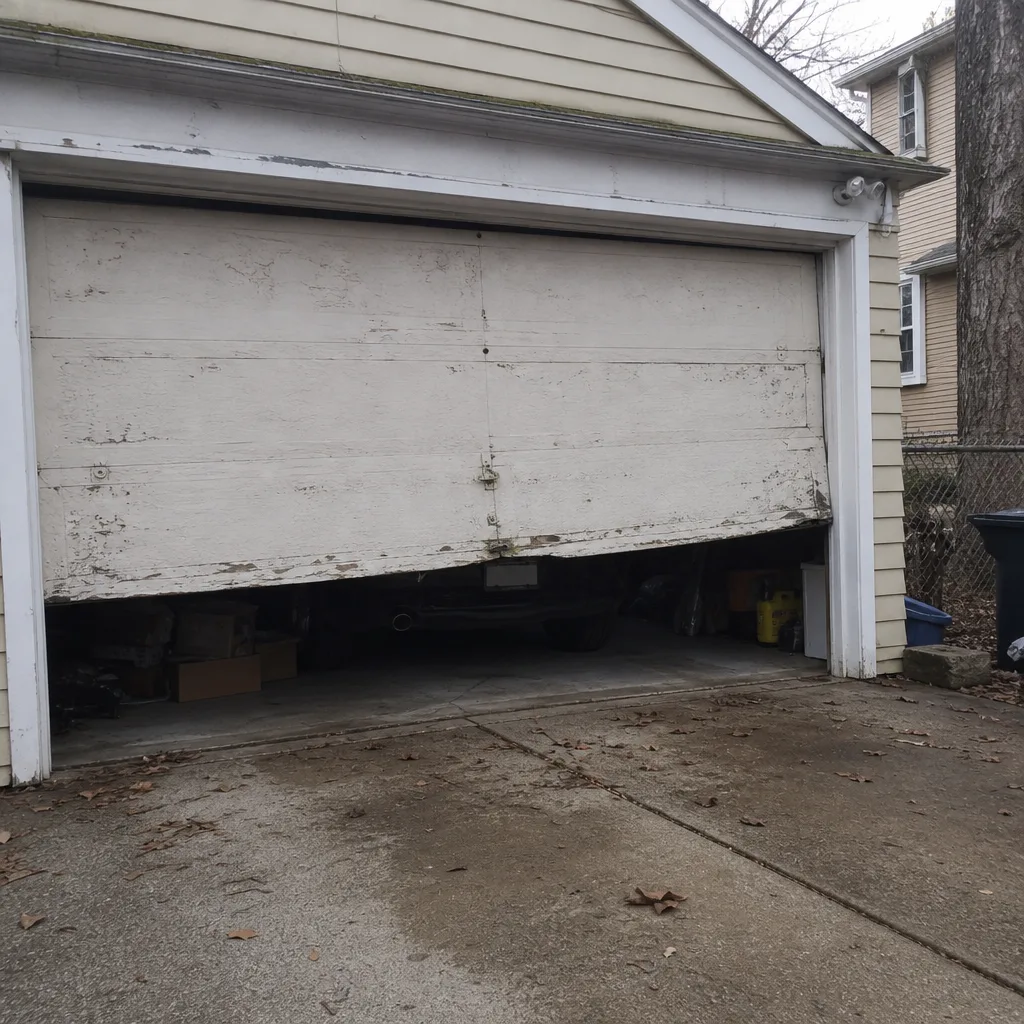
See the difference
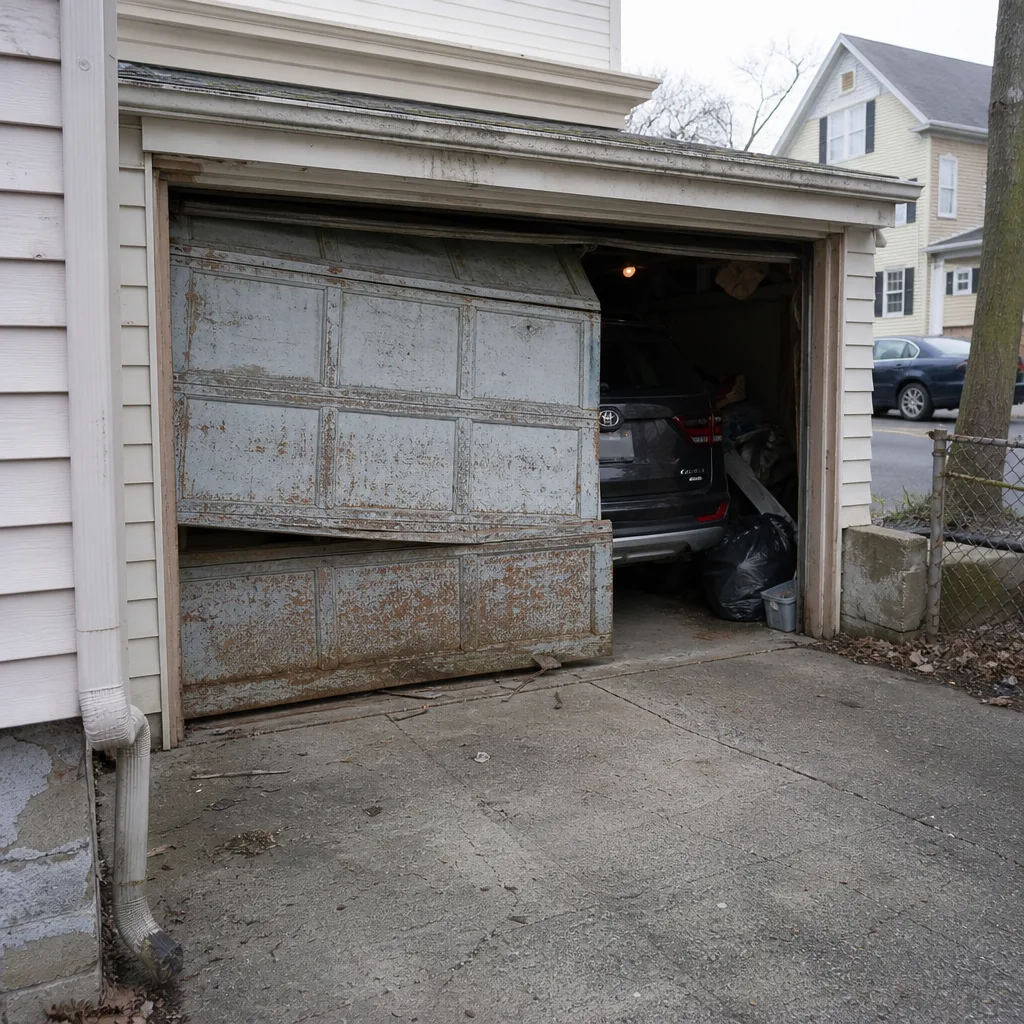 Before
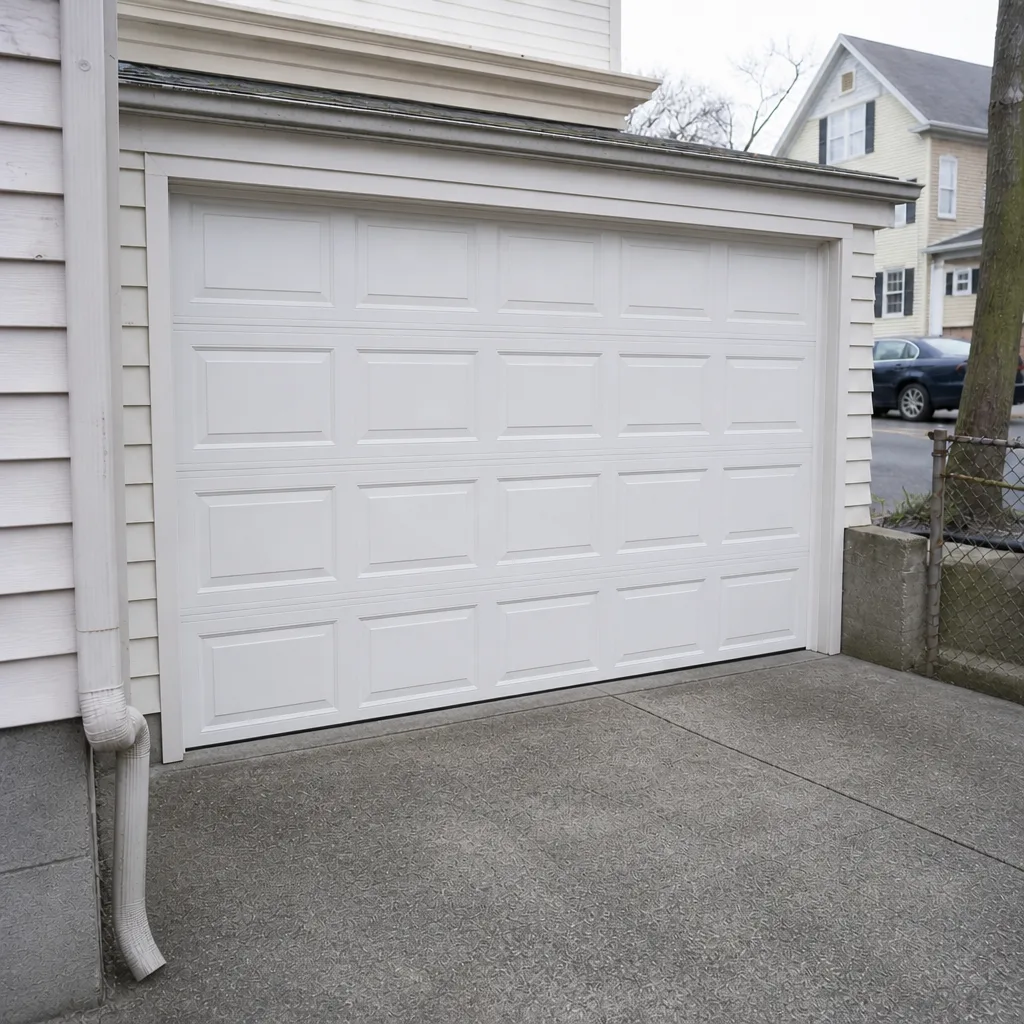 After
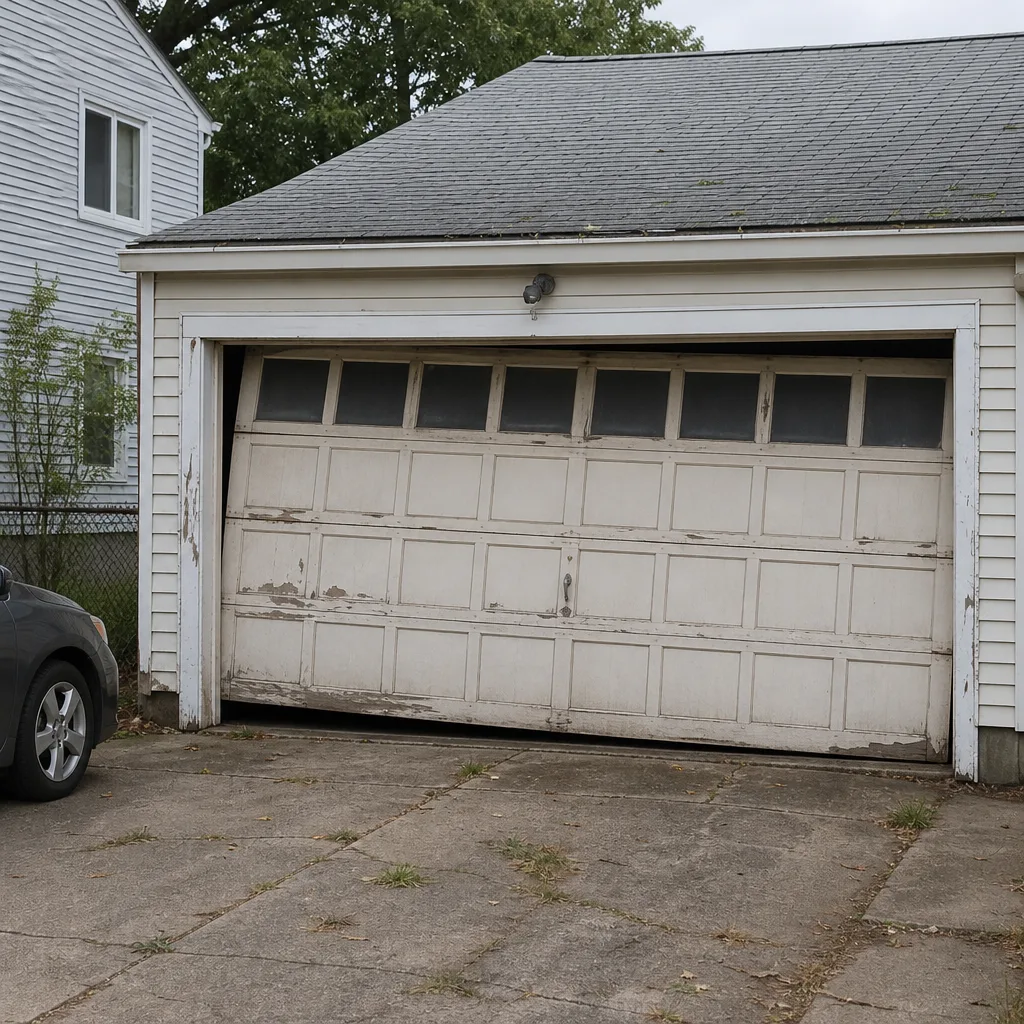 Before
 After
 Before
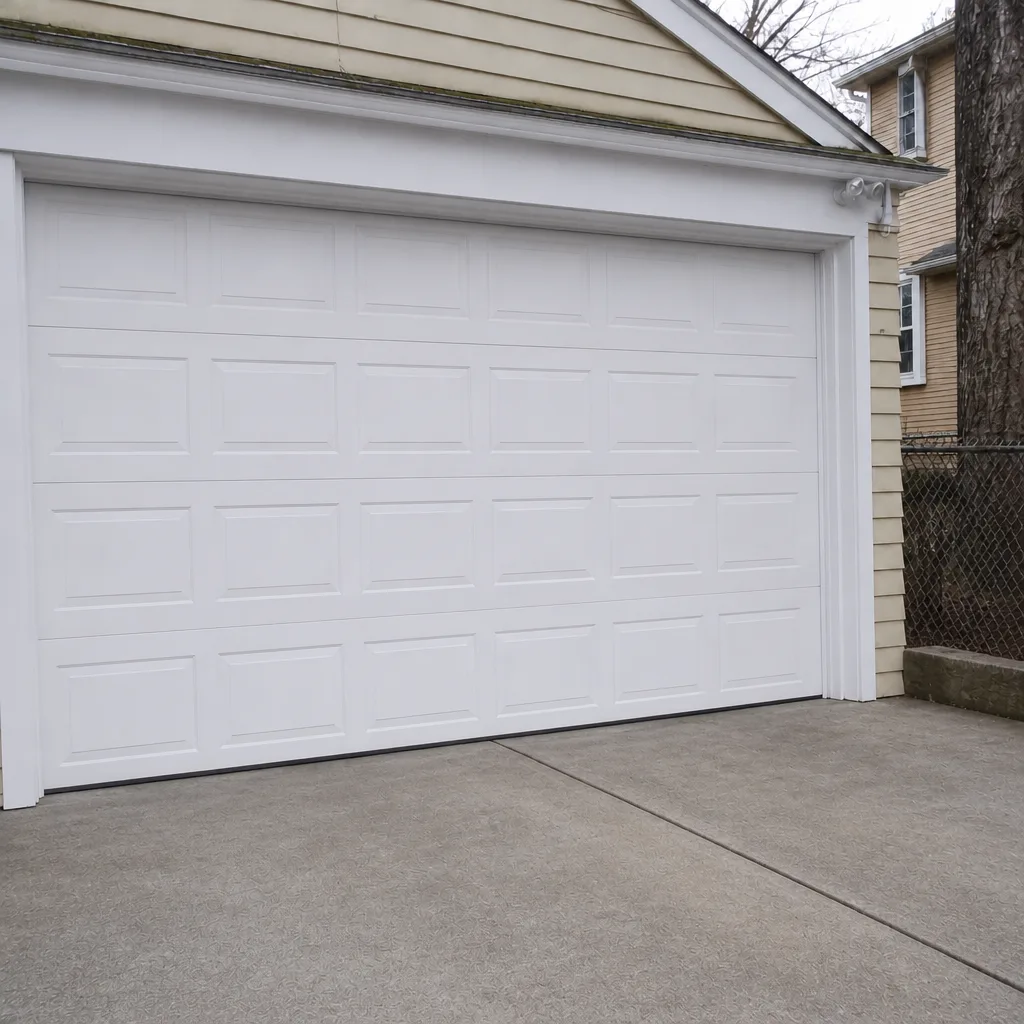 After
When to Call a Professional
The scenarios that warrant a professional call are specific. Call a professional when a spring is broken or looks deformed, when a cable is frayed or slack, when a door has come off its track, when a door won’t open and the opener light is flashing a fault code, when the door is suddenly heavy to lift by hand, or when a panel is damaged and the door is needed for daily entry. None of these are jobs to troubleshoot alone; they’re jobs to schedule. Our operating hours are built around that. We answer 24/7. Fast dispatch from 7am to 7pm, Sunday through Friday; we’re closed on Saturday. Spring repair is core work for us, not an afterthought, and it’s the call most homeowners should make before an urgent situation arrives at their door. Same-day service is available for the repairs that need it. Somerville Garage Door Repair Pros offers free estimates in Somerville – call (844) 793-4614. The price is quoted and agreed before any work starts, and the written estimate is the number you pay.
Frequently Asked Questions
No, careful handling does not make torsion spring work safe. A loaded torsion spring stores enough energy that a single slip with a winding bar can cause serious injury, and the failure happens without warning. This is the one job on the entire list we recommend every homeowner hold off on, regardless of skill, because the risk isn’t a broken door; it’s a person. Call (844) 793-4614 for a safe spring replacement.
It depends on one spring versus a matched pair, and on the door’s size and hardware. A single spring replacement is priced as one spring; a matched pair runs roughly double, and we usually recommend replacing them together. Whatever the range, the written estimate sets the final price and we quote it before any work starts. Call (844) 793-4614 for a free estimate.
No. A door with a broken spring has lost its counterbalance and becomes dangerously heavy. The opener will be working against the full weight the spring was built to carry, and the door can drop hard once the opener gives up. Stop using the door; call in a professional for both the spring and a check of the opener.
You can, but older Somerville garages make it more likely you’ll find issues a how-to guide doesn’t cover. Low ceilings, original jackshaft setups, and unusual clearances are common here, and they affect which opener fits. A professional measure tells you which unit works before you order. Same-day service isn’t the promise on installation – a scheduled install with a written price is.
The written estimate is the price for the work described. If the technician discovers something that changes the scope, you’ll hear about it before any new work starts, and you decide how to proceed. We don’t add charges after the job. Call (844) 793-4614 for a free, no-obligation estimate.
Bottom seal replacement, lubrication, minor hinge tightening, remote and keypad reprogramming, track cleaning, and a visual inspection are all safe. If you stay on this list, you’ll save money and add no risk. Anything involving springs, cables, or structural headers is a professional call.
The Bottom Line
The DIY versus professional line isn’t about whether you’re handy. It’s about where the downside is. On bottom seals, lubrication, and remotes, the worst case is you do it twice, so DIY is a perfectly sensible way to save. On torsion springs and cables, the worst case is an injury, and no amount of care closes that gap. The middle-ground jobs – panels and openers – are a judgment call based on how old and specific your garage is. The practical takeaway: do the safe work, prepare well for the pro, and let an experienced technician handle anything holding tension. Keep your door moving and you’ll get years more out of it.
If you’d like a professional read on your door before you decide, Somerville Garage Door Repair Pros offers free estimates across Somerville and surrounding neighborhoods. Call (844) 793-4614. We answer 24/7. Fast dispatch from 7am to 7pm, Sunday through Friday, and we’re closed on Saturday. Spring failure is a safety issue, and the smartest move is to have someone who knows the hardware look at it before it becomes an urgent one.
Written by the team at Somerville Garage Door Repair Pros.